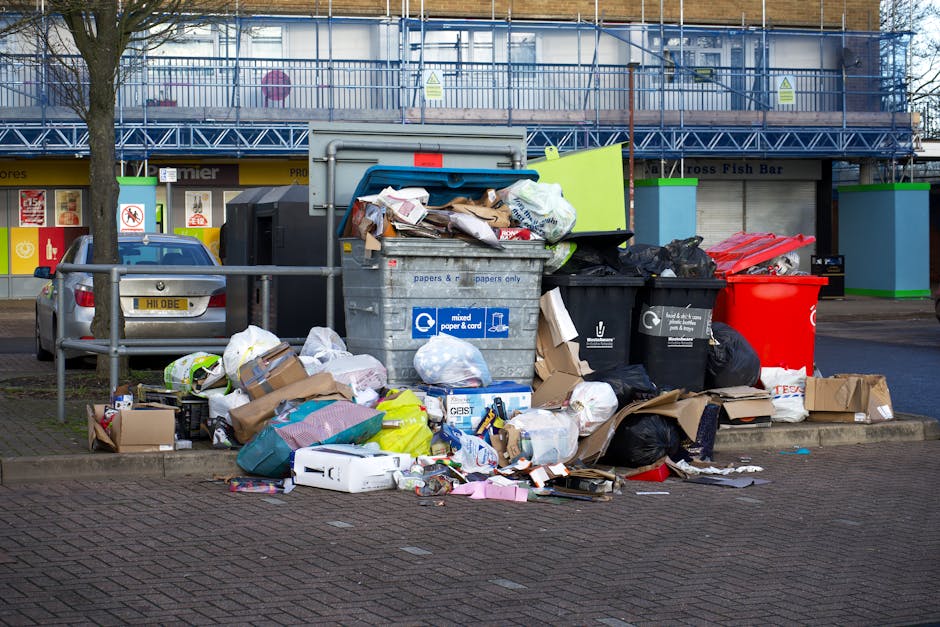
Heathrow Airport Cranford rubbish removal jobs and access tips

If you are dealing with clearance work near Heathrow Airport in Cranford, the job is rarely just about lifting bags and loading a van. Access can be awkward, timings can be tight, and the difference between a smooth job and a messy one is often in the planning. That is exactly why Heathrow Airport Cranford rubbish removal jobs and access tips matter: they help you move waste safely, keep disruption down, and avoid the classic "we thought we could just pull up outside" problem. In our experience, the tricky part is usually not the rubbish itself. It is the kerbside, the narrow turns, the shared access, the stairs, the timing, and the one storage cupboard nobody mentioned until the morning of the job.
This guide brings together the practical side of rubbish removal jobs in Cranford, especially where Heathrow traffic, airport-adjacent roads, and residential access all collide. You will find a step-by-step process, common pitfalls, compliance considerations, and access planning advice that actually helps on the day.
Why Heathrow Airport Cranford rubbish removal jobs and access tips matter
Cranford sits in a very particular pocket of west London. Roads can be busy, parking can be limited, and airport-related traffic can change the feel of a street in minutes. Add builders, tenants, landlords, office managers, and one-off clearances into the mix, and the job needs more than muscle. It needs timing, patience, and a decent access plan.
Access tips matter because they reduce wasted time. They also reduce the risk of damage to walls, stairwells, lifts, floors, and parked vehicles. If the team knows where the waste is, how it will be carried out, whether there is a lift, and where the vehicle can wait, the whole job tends to feel calmer. Calm is underrated. Very underrated.
For airport-adjacent work, the pressure usually comes from three sides:
- traffic and road timing around Heathrow corridors
- tight access in flats, terraces, and side returns
- the need to remove waste without disturbing neighbours or business operations
That is especially true for jobs involving waste removal, where the load may include mixed household items, old furniture, broken appliances, or builder's debris. The more clearly you understand the site, the smoother the removal.
Expert summary: In Cranford, a good rubbish removal job is usually won before the van arrives. Access notes, parking decisions, and waste sorting do more to protect time and cost than most people realise.
How Heathrow Airport Cranford rubbish removal jobs and access tips works
The basic process is straightforward, but the detail matters. A proper rubbish removal job normally starts with a quick assessment of the site, the waste type, and the access route. Then comes the actual collection, loading, sweep-up, and final disposal or recycling. Easy to say. Less easy when the only place to park is half a street away and the client has a sofa wedged behind a stair gate.
Here is how it usually works in practice:
- Initial review. You identify what needs removing, where it is located, and whether any items are awkward or hazardous.
- Access check. You confirm parking, entry points, stairways, lift size, gate codes, and whether there are any time restrictions.
- Arrival and loading. The team carries items out carefully, working around neighbours, tight hallways, and any delicate surfaces.
- Separation. Reusable, recyclable, and non-recyclable items are handled differently where possible.
- Final tidy. Loose debris is swept or collected so the property is left in a usable state.
For domestic jobs, services like house clearance or home clearance are often the right fit. For flats, a flat clearance approach is usually better because it takes account of shared access, stairwells, and communal areas.
One thing many people miss: access tips are not just about the front door. They include the route from the collection point to the vehicle. A perfectly good internal path can still be unusable if there is a low arch, a coded gate, a tight turn, or a parking bay that gets busy at school run time.
Key benefits and practical advantages
When rubbish removal is planned properly, you gain a lot more than an empty room. The real benefits are practical and immediate.
- Less disruption. Good access planning keeps noise, waiting, and back-and-forth to a minimum.
- Faster completion. Clear instructions save time, especially in buildings with shared entrances or limited loading space.
- Lower risk of damage. Knowing the route helps protect walls, lifts, door frames, and flooring.
- Better value. A well-prepared job usually runs more efficiently, which helps when you are comparing quotes.
- Cleaner outcomes. Sorting items in advance makes recycling and disposal more straightforward.
There is also a morale benefit, odd as that sounds. Once a space is cleared, everything feels lighter. You open the window, the room smells less stale, and there is finally room to think. People often notice this after a furniture clearance or when old bulky items are taken away as part of furniture disposal.
For businesses near Heathrow, the advantage is even more obvious. A tidy site reduces operational friction. If your team can keep work moving while waste is removed discreetly, that is a real win. If you need a more structured arrangement, business waste removal is often the more sensible route than ad hoc skips or repeated DIY trips.
Who this is for and when it makes sense
This topic matters to a wide mix of people in Cranford and the surrounding Heathrow area. It is not just for property clearances after a tenancy ends. The need shows up in all sorts of everyday situations.
- Homeowners clearing old furniture, loft clutter, or garage build-up
- Landlords and letting agents preparing a property between tenancies
- Tradespeople dealing with leftover materials after a refurb or repair
- Office managers moving out old desks, chairs, archive boxes, and broken kit
- Residents in flats with limited access, shared hallways, or strict parking rules
- Business owners needing a reliable service around airport schedules and staff hours
It makes sense when the waste is too much for normal bins, too bulky for a car boot, or too awkward to shift safely without help. It also makes sense when access is the main headache. A side entrance, a basement, a top-floor flat, or a building with no lift can all turn a "quick job" into a long afternoon.
If you are dealing with a mix of items, related services such as garage clearance, loft clearance, or office clearance may be a better fit than trying to handle everything as one vague pile of rubbish.
Step-by-step guidance
Here is a practical way to approach rubbish removal jobs around Heathrow and Cranford without making life harder than it needs to be.
1. Identify the waste clearly
Split the items into rough groups: bulky furniture, general household rubbish, appliance waste, builder's waste, garden waste, confidential papers, and anything potentially hazardous. That first sort saves a lot of confusion later.
2. Measure the access, not just the items
Check door widths, stair turns, lift size, gate codes, ceiling height in basements, and any obstacles like planters or tight railings. It sounds obvious, but people often forget to measure the route. Then they are surprised when the wardrobe won't turn the corner. It happens. More than you would think.
3. Confirm parking and loading space
A vehicle that cannot get close enough quickly turns a tidy job into a long carry. If the road is busy or restricted, plan the loading point early. In Heathrow-adjacent areas, that matters even more because local traffic can shift quickly.
4. Move small, fragile, or valuable items out of the way
Before removal begins, put aside anything you want to keep. Keys, documents, chargers, sentimental bits, remote controls, and that one envelope you were sure was "somewhere safe" should all be removed from the clearance area. Saves stress later.
5. Prepare special items separately
If you have fridges, freezers, or appliances, keep them noted separately. The same applies to chemicals, paints, or anything that may need special handling. If you need appliance help, fridge and appliance removal is a relevant service to look at.
6. Book the right type of clearance
Do not force a general waste solution onto a specialist job. Builder's rubble is not the same as old sofas, and office archive waste is not the same as garden cuttings. For mixed builder debris, builders waste clearance is more suitable. For outdoor waste, garden clearance usually makes more sense.
7. Give the crew practical access notes
Tell them the entrance that works best, whether there is a concierge, where they can park, and whether the lift is shared. Mention the time window if there is one. A simple note like "use side gate, ring flat 3, parking best by the service road" can make a huge difference.
Expert tips for better results
Small improvements can save the day. Honestly, they often do.
- Book around traffic patterns. Early morning or quieter mid-morning slots are often easier than squeezing a job into a peak travel window.
- Clear the path first. Move shoes, mats, bins, plant pots, and anything that might catch a wheel or boot.
- Group by destination. Put recyclables together, keep donations or reuse items separate, and isolate anything that may need specialist handling.
- Take photos before the job. Not for drama, just to help explain the access and the volume of waste.
- Think about neighbours. In shared buildings, a quick heads-up can make a clearance feel less intrusive.
One surprisingly useful tip: make sure the vehicle can leave as easily as it arrives. A blocked exit can cost more time than a blocked entrance. People often forget the return journey. You only do that once, usually.
If your job includes confidential paperwork, do not just toss it into a mixed bag. Consider confidential shredding so papers are handled sensibly and securely.
And if the job is inside a property with lots of residual clutter, a service like house clearance or home clearance can be more efficient than piecing it together item by item.
Common mistakes to avoid
Most clearance problems are preventable. The trouble is, they are usually only obvious after the fact.
- Ignoring parking restrictions. If the vehicle cannot stop safely, the whole job slows down.
- Not mentioning stairs or lifts. That can completely change the labour needed.
- Mixing everything together. Separate what can be reused, recycled, or needs specialist handling.
- Leaving access notes to the last minute. By then, the crew is already on the move.
- Assuming all rubbish can go anywhere. Some items need a specific disposal route.
- Forgetting fragile surfaces. Hallway paint, tiled steps, and glass doors deserve extra care.
Another common one: people underestimate how much waste they have. A few bags, a broken shelf, and a mattress can turn into a van full before you know it. That is why planning against volume is smarter than planning against hope. Hope is not a loading strategy.
For bulky bedroom items, a dedicated mattress and sofa disposal service can be a better solution than trying to squeeze oversized items into a general run.
Tools, resources and recommendations
You do not need a warehouse full of kit to get rubbish removal right, but a few practical tools help more than people expect.
- Tape measure. Useful for door widths, lift dimensions, and awkward furniture angles.
- Phone camera. Quick photos help explain access and show the amount of waste.
- Marker tape or sticky notes. Good for labelling keep, remove, recycle, and delicate items.
- Gloves and sturdy footwear. Basic, but worth saying.
- Clear bin bags and boxes. Handy for loose items, papers, and mixed small waste.
For people who like to plan carefully, it can also help to review service pages that match the type of waste you have. For example, recycling and sustainability gives a useful frame of mind for deciding what should be reused or separated before loading.
If you are unsure whether a job should be treated as clearance, disposal, or waste removal, think about the shape of the task. If it is a full room, a property, or a bulk load, a clearance service is often the simplest option. If it is specific items, disposal services may be the better fit. For example, appliance-heavy jobs may point you towards fridge and appliance removal, while outdoor overspill may call for garden clearance.
Law, compliance, standards, and best practice
This part matters, even if people sometimes try to skip it. Waste must be handled responsibly, and the person arranging the removal should make sure the waste is passed to a proper carrier and disposed of in line with accepted UK practice. That is the general rule of thumb, and it is a sensible one.
Good practice usually includes:
- using a legitimate waste removal provider
- keeping records or confirmation where needed
- separating hazardous or specialist waste from general waste
- avoiding contamination of recyclable loads
- making sure access work does not create avoidable safety risks
If a job includes items that could be dangerous, awkward, or environmentally sensitive, it should be flagged early. That is especially relevant for anything that may fall under hazardous waste disposal. Do not guess. When in doubt, ask before the van arrives.
From a safety perspective, it is also wise to follow the provider's own guidance on handling, loading, and site access. Pages such as health and safety policy and insurance and safety are there for a reason. In plain English, they help show that the work is being done with the right care.
For clients comparing providers, it is also fair to look at how payment is handled and whether the business explains its terms clearly. That is where payment and security and terms and conditions become useful reading, even if nobody rushes to read them over breakfast.
Options, methods, and comparison table
Not every job near Heathrow needs the same solution. The best method depends on waste type, volume, access, and how quickly the space needs to be cleared.
| Method | Best for | Access strengths | Typical drawback |
|---|---|---|---|
| Man-and-van style removal | Small to medium loads, awkward furniture, mixed household waste | Good for tight access, stairs, and quick collections | Less suitable for very large volumes |
| Dedicated clearance service | Full rooms, properties, or business clearances | Better planning for flats, offices, and shared access | Needs clearer briefing before arrival |
| Skip-based approach | Projects with predictable waste and space on-site | Good if the property has driveway or loading space | Not ideal where parking is limited or access is tight |
| Specialist item disposal | Appliances, mattresses, sofas, or specific waste types | Reduces handling risk for bulky items | May need multiple collection types if the load is mixed |
For some readers, the answer is very simple. If the access is awkward, a clearance team that understands how to work around shared entrances and tight kerbs is probably the cleanest option. If the project is a controlled refurbishment, a service like builders waste clearance may fit better. If you are deciding whether a skip is even practical, the page on what can go in a skip is a useful starting point.
Case study or real-world example
Picture a small flat near a busy Heathrow route. Nothing dramatic. Just a typical end-of-tenancy clearance. The tenant has a bed frame, a sagging sofa, two broken chairs, some boxes of old files, and a fridge that has to go. The road outside is busy by mid-morning, and the flat is on the second floor with a narrow communal stairwell.
At first glance, it sounds straightforward. But the access is the whole story. Parking is limited, the stairwell is shared, and there is no lift. The smart move is to plan a short loading window, identify the best place for the vehicle in advance, and clear the route from the flat to the exit before any lifting begins.
In a real job like that, one small detail can change everything. If the fridge is left until last and the hallway is already full of bags, the team has to backtrack. If the fridge is noted early and the route is kept open, the removal becomes much smoother. The same goes for sofas and mattresses. They are awkward, and there is no stylish way to carry a sofa downstairs. You just get on with it, a bit sweaty, a bit careful, and ideally without clipping the wall corner on the way down.
That is why access tips matter so much. The job itself may not be unusual, but the setting is. Cranford near Heathrow has enough traffic and enough mixed property types to reward good planning every single time.
Practical checklist
Use this checklist before the team arrives or before you book the job.
- List all items to be removed.
- Separate bulky furniture from general rubbish.
- Identify anything hazardous or specialist.
- Measure doors, stairs, lifts, and tight turns.
- Confirm where the vehicle can park.
- Check if there are time restrictions or access codes.
- Move valuables, documents, and keepsakes out of the way.
- Protect floors or fragile hallway surfaces if needed.
- Tell neighbours or building management if appropriate.
- Ask about disposal routes for appliances, mattresses, or mixed loads.
- Review the provider's safety and payment information.
- Keep the access path clear from start to finish.
If you are dealing with a larger household job, it can be worth exploring loft clearance, garage clearance, or broader home clearance support rather than forcing everything into one rushed lift-out.
Get a free quote today and see how much you can save.
Conclusion
Heathrow Airport Cranford rubbish removal jobs and access tips are really about control. Control over timing, control over access, and control over how waste is sorted and carried away. Once you get those three things right, the job becomes much easier to manage, even in busy or awkward locations.
Whether you are clearing a flat, emptying a garage, dealing with office waste, or planning around airport-side traffic, the same principle applies: think through the route first. The waste matters, yes. But the route is what makes the difference between a stressful day and a proper clean finish.
And when the space is finally clear, there is a strangely satisfying quiet to it. Just room, light, and a fresh start. Not a bad outcome at all.
Frequently Asked Questions
What are Heathrow Airport Cranford rubbish removal jobs and access tips?
They are the practical planning steps that help rubbish removal work smoothly in Cranford and the Heathrow area, where traffic, parking, and building access can be a challenge.
Why is access such a big issue in Cranford?
Because many jobs involve flats, shared entrances, busy roads, and limited parking. Even a small clearance can take longer if the vehicle cannot get close enough.
What should I tell the removal team before they arrive?
Give them item details, access instructions, parking notes, floor level, lift availability, and any time restrictions. The more useful the briefing, the better the job tends to go.
Can rubbish removal handle bulky furniture as well as general waste?
Usually yes, but bulky furniture is often better handled through a specific service such as furniture clearance or furniture disposal so it can be loaded and processed appropriately.
What if my waste includes a fridge or other appliance?
Appliances should be flagged separately. A service like fridge and appliance removal is more suitable because these items can need special handling.
Is it better to use a skip or a removal team?
It depends on access, volume, and the kind of waste. If parking is tight or the waste is awkward, a removal team is often easier. If you have room on-site and a predictable load, a skip may suit you better.
What counts as hazardous waste?
Anything that may be dangerous or require special disposal should be treated carefully, including certain chemicals, paints, or contaminated items. If you are unsure, ask before booking.
How can I make a flat clearance easier?
Clear the route, measure the access, tell the team about stairs or lifts, and separate the items you want kept. A bit of prep saves a lot of hassle later.
Are business waste removals different from domestic jobs?
Yes, usually. Business jobs often need tighter timing, more discreet handling, and better coordination around staff, customers, or building access.
What should I do with confidential papers?
Keep them separate and arrange confidential shredding so they are handled securely rather than mixed in with general waste.
How do I know if a provider is acting responsibly?
Look at how they explain safety, payment, compliance, and recycling. Clear information on pages like health and safety policy, insurance and safety, and recycling and sustainability is a good sign.
Can I book a full home or house clearance instead of multiple smaller jobs?
Yes, and that is often the smarter route if you have several rooms, a loft, or a garage to clear. It keeps the process simpler and usually saves time.
What is the best first step if I am overwhelmed by the amount of waste?
Start by separating the waste into rough groups, then measure the access route. Once you know what is being removed and how it will leave the property, everything feels more manageable.